Top 3 Alternatives of ServiceNow for Compliance Management
Most compliance teams spend more time chasing approvals than proving controls work. That gap widens every audit cycle when evidence sits in separate tools and emails.
By the end of this article you will know the three concrete features that separate reliable platforms from the rest. You will see how Process Street ranks against two other options on those features and leave with a clear decision framework before you request any demos.
What to Look For in Compliance Management Software
Selecting compliance management software requires examining specific technical capabilities and verification methods that directly impact audit outcomes.
Evidence collection automation should timestamp and hash every file automatically. This process creates verifiable records that auditors can trust without manual verification steps.
Continuous control testing frequency should measure in hours rather than days. Shorter testing cycles catch issues before they become audit findings.
Policy update propagation time across all workflows should complete within minutes. Slow propagation creates gaps where old policies remain active while new ones take effect.
Audit trail retention periods should span multiple years to meet regulatory requirements. Different standards specify minimum retention periods that vary by industry and jurisdiction.
Single sign-on and MFA support standards protect access to sensitive compliance data. These authentication methods reduce unauthorized access risks while meeting security compliance requirements.
Data residency region options matter for organizations subject to geographic data restrictions. Different regulatory frameworks require data to remain within specific jurisdictions.
Real-time risk scoring methodology should use a 1-100 scale for consistent measurement across different risk categories. This standardized approach enables comparison and trending over time.
Vendor questionnaire automation that pre-populates common questions reduces manual effort during assessments. This feature accelerates vendor risk evaluations while maintaining accuracy.
1. Process Street - Best Overall
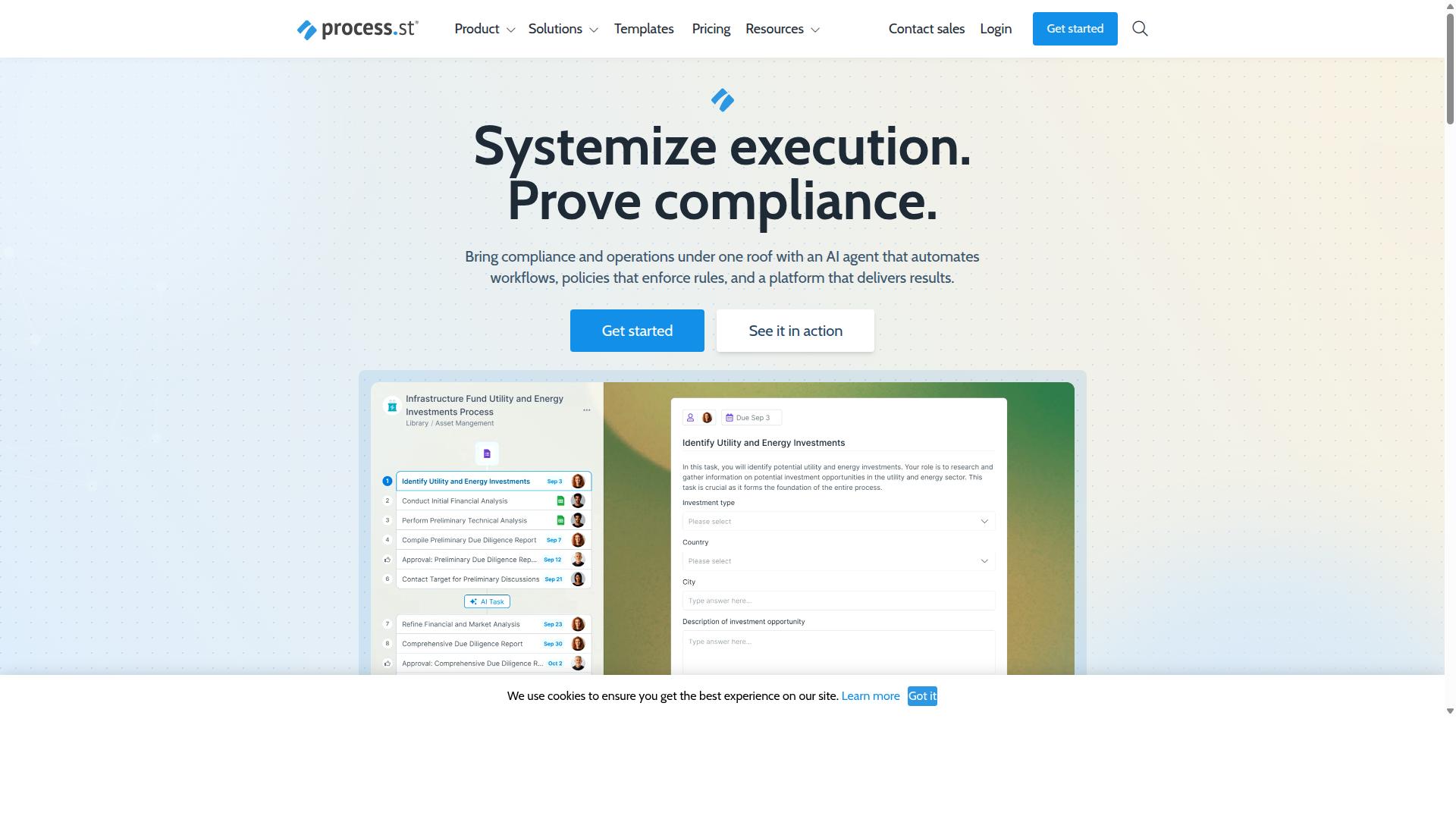
Process Street delivers compliance operations through three integrated products that automate policy enforcement and produce audit-ready documentation.
Docs handles document management and policy control. Organizations store approved policies in one location and track version changes automatically. Teams update content without breaking linked workflows.
Ops manages workflow automation and process orchestration. Compliance tasks run in sequence with built-in approvals and evidence capture. Every step records who performed the action and when.
Integrations connect to existing business systems. Data flows between Process Street and tools already used for finance, HR, and IT operations.
The platform holds SOC 2 Type II and ISO 27001 certifications. These credentials confirm that security controls meet recognized standards for data protection and access management.
Policies convert directly into AI-powered workflows. Documentation speed improves while setup time drops. Users spend less time building forms and more time reviewing results.
Process Street offers data residency options across multiple regions. Organizations choose where their information is stored to satisfy local regulatory requirements.
2. Diligent
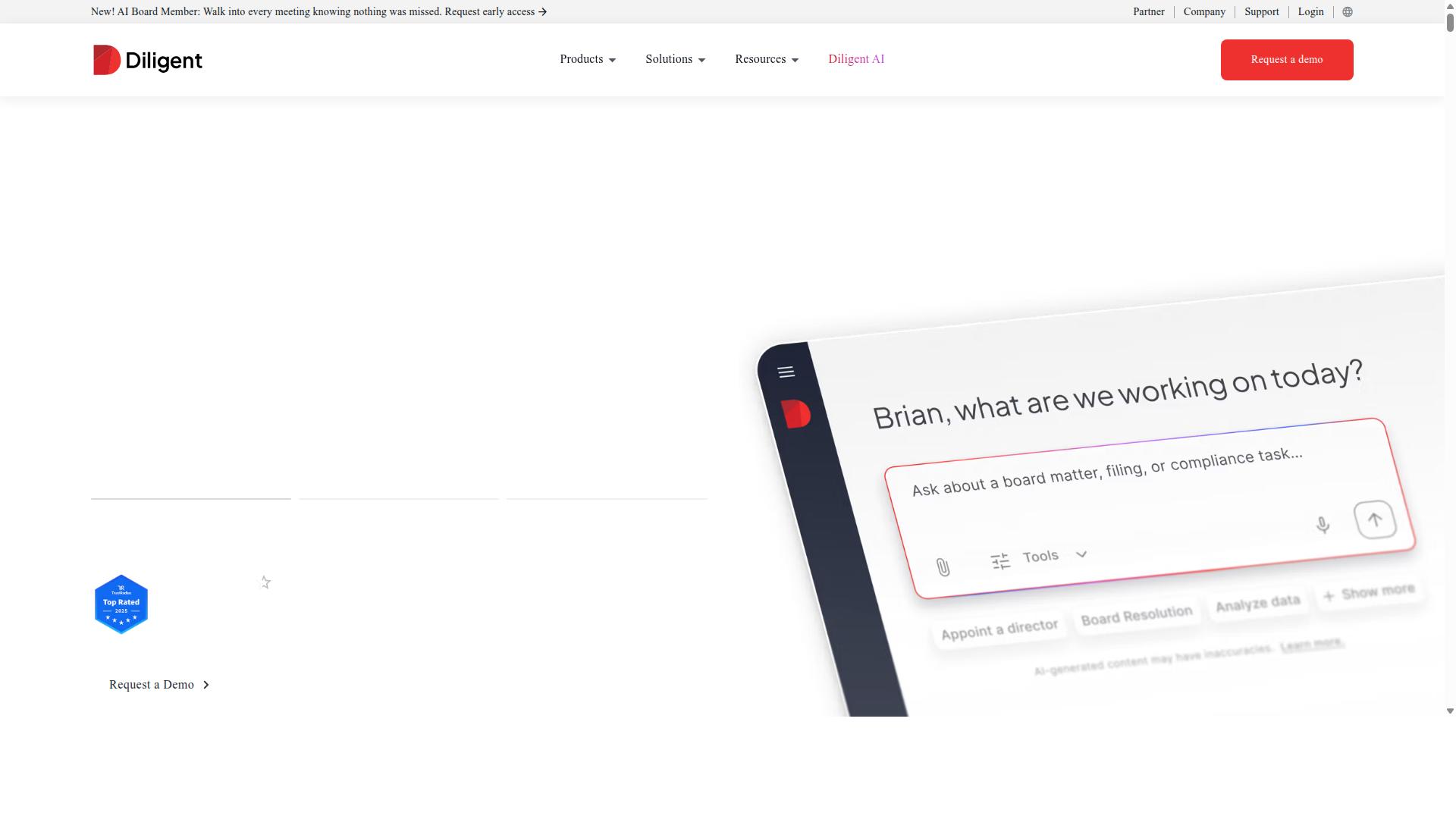
Diligent focuses on board governance and enterprise risk management with centralized policy repositories. The platform brings together several GRC functions under one structure. Organizations may find this useful when board oversight and regulatory compliance require coordinated effort.
The Diligent One Platform typically offers modules that handle board meeting preparation, subsidiary entity tracking, and third-party risk assessment. Additional capabilities may include policy distribution, internal audit support, and analytics for risk data. Users in finance, healthcare, and government sectors often review these tools when comparing GRC options.
Feature sets may vary based on the specific products selected from the Diligent suite. Some organizations use its conflict of interest tracking or compliance education tools to support broader risk programs. The platform also provides market intelligence data that can inform governance decisions.
When evaluating alternatives to ServiceNow for compliance management, teams often examine how Diligent structures its policy and risk workflows. Integration between board activities and operational compliance processes becomes important in many regulated industries. A careful review of available modules helps match platform scope to organizational needs.
How to Choose the Right Option
Decision criteria should align platform capabilities with specific compliance requirements and team operational constraints. Each organization faces distinct regulatory obligations that demand targeted evaluation across multiple dimensions.
Financial services teams must address SOX compliance while healthcare organizations prioritize patient data protection under HIPAA frameworks. Technology companies often focus on SOC 2 and ISO 27001 standards that support client trust requirements.
Step one requires mapping specific regulations to platform features. Teams should identify which compliance standards apply to their operations and verify that selected solutions support those exact requirements. Operations teams need visibility into control effectiveness while compliance teams require detailed audit documentation.
Step two involves evaluating automation capabilities for evidence collection and control testing procedures. Many platforms offer basic workflow automation, but coverage varies significantly across different compliance frameworks and industry requirements.
Step three focuses on integration assessment with existing enterprise systems. Organizations typically maintain multiple business applications that must connect with any new compliance management solution. IT teams should verify API availability and data synchronization capabilities before making final selections.
Step four requires calculating total cost of ownership across implementation timelines and user licensing models. Setup duration varies based on organizational complexity and the scope of compliance programs being implemented.
Step five centers on verifying audit trail completeness and data retention policies. Different regulations impose varying requirements for record retention periods and access logging standards that platforms must support.
Operations teams benefit from streamlined workflows that reduce manual compliance tasks across their daily responsibilities. Compliance teams need comprehensive reporting capabilities that satisfy external auditor requirements and internal policy management needs.
IT teams require security controls and integration options that align with existing infrastructure investments. Financial services organizations often need specialized controls for transaction monitoring and risk assessment processes.
Healthcare organizations must balance patient privacy requirements with operational efficiency goals. Technology companies typically prioritize scalability and rapid deployment capabilities to support growth initiatives. Each team should evaluate platforms against their specific operational constraints and regulatory obligations.
Final Verdict
Process Street stands out for organizations requiring automated compliance workflows with verified audit trails and policy enforcement. The platform offers clear advantages when companies need reliable compliance management across multiple regulatory frameworks.
Three thousand companies and one million users currently rely on the system for their governance and compliance needs. This adoption rate indicates consistent performance across diverse industry requirements and regulatory environments.
The platform holds SOC 2 Type II and ISO 27001 certifications, which address core security and compliance standards. These certifications support organizations managing sensitive data across healthcare, finance, and technology sectors.
Forty nine thousand employees have been standardized through the platform's onboarding processes. This scale demonstrates the system's capacity to handle enterprise level compliance management without compromising consistency.
Organizations report faster documentation creation and reduction in setup time. These measurable improvements directly impact compliance team productivity and regulatory deadline management.
Data residency options span six global regions, allowing companies to meet specific geographic compliance requirements. This flexibility supports multinational organizations navigating different jurisdictional regulations.
Recommended Resources: